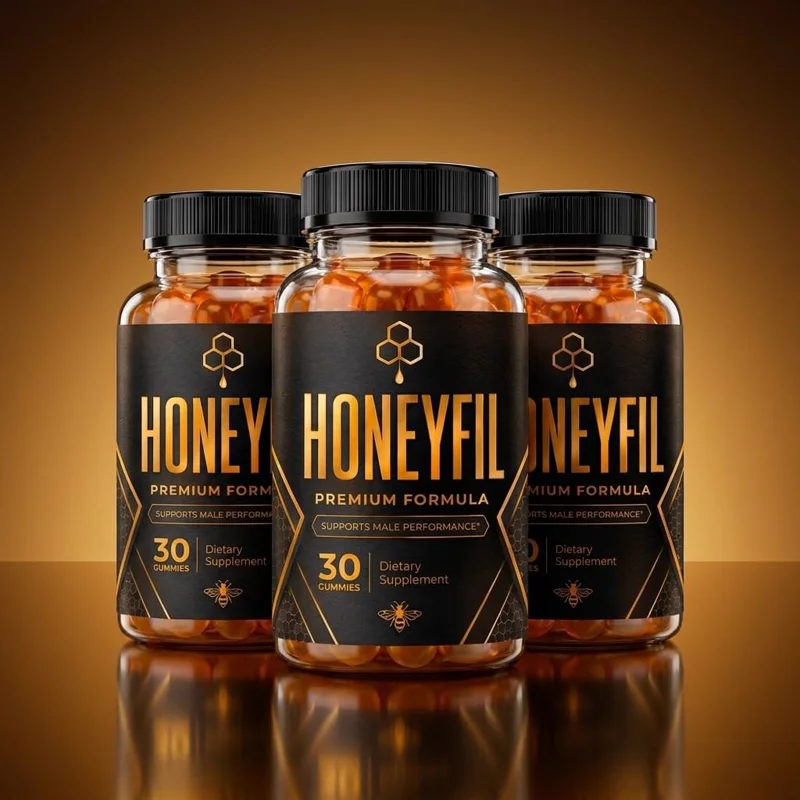
Honeyfil
This entry is unpaid and independent. When we do point to a specific product, we link to authorized retailers and may earn a commission at no extra cost to you.
A buy button that didn't lead to Honeyfil
Before getting to what's in the gummy, one finding is worth putting first: an independently published review of Honeyfil described clicking through the brand's own "Buy Now" button and landing on a checkout page carrying an entirely different product name — JellyFil. JellyFil is a real, separately marketed gummy supplement in its own right, sold under its own branding elsewhere. We can't confirm whether that redirect still happens on every visit, whether it's an isolated glitch, or whether the two products share a checkout vendor behind the scenes — but a shopper who searches for one product by name and ends up entering payment details on a page branded for another is exactly the kind of thing worth knowing before, not after, checkout.
Eight named ingredients, no disclosed amounts
Honeyfil is sold as a once-daily gummy, and the brand's own site lists eight ingredients by name: raw honey extract (marketed as a chrysin source), KSM-66® ashwagandha root, tribulus terrestris standardized to 45% saponins, chelated zinc bisglycinate, black maca root, Korean red ginseng, vitamin D3, and Testofen® fenugreek seed extract standardized to 50% fenusides. Each of those is a real, identifiable ingredient with its own research history. What's missing from the label copy and every source page we checked is a milligram figure for any single one of them — so there's no way to compare what's actually in a Honeyfil gummy against the doses used in the studies behind those ingredients' reputations. The brand's outside marketing also layers on additional claims about men's health beyond general energy and vitality support; those broader claims aren't independently verifiable, so this report doesn't repeat or evaluate them.
KSM-66® ashwagandha and Testofen® fenugreek are standardized branded extracts with published research behind the extracts themselves, and chrysin is a genuine flavonoid found naturally in honey. None of that research was run on Honeyfil as a finished, combined formula, and none of it can stand in for a per-gummy dose that isn't published anywhere on the brand's own materials.
No manufacturer named, and a claim we couldn't verify
Honeyfil's official site does not name a manufacturer or a legal company anywhere we could find. The only origin statement offered is that the product is "manufactured in the United States with globally sourced ingredients" — that's the brand's own wording, and without a named facility or company to check it against, it's not something this report can independently confirm one way or the other. Checkout and support run through Cartpanda, a third-party processor used across a wide range of unrelated supplement brands; Cartpanda's Better Business Bureau profile shows a recurring pattern of complaints describing denied or partial refund requests. A handful of similarly spelled domains are also in circulation, which by itself proves nothing, but combined with an unnamed manufacturer and a reported checkout mismatch, it adds up to a company identity that's genuinely hard to pin down.
The bundle math
Honeyfil's checkout lists three bundle totals rather than a simple per-bottle price: two bottles for $158, three bottles for $207, and six bottles for $294. Breaking those down puts the per-bottle cost at roughly $79, $69, and $49 respectively — but those per-bottle figures are our own arithmetic on the vendor's bundle totals, not numbers the checkout page states directly. Free shipping is only included on the three- and six-bottle tiers; the two-bottle order adds a separate shipping charge on top of its $158 total. There's no single-bottle option listed at all — every visible price point assumes a multi-bottle commitment up front.
Why this earns a Grade C
Grade C on this site marks products built on real, checkable ingredients that are undermined by red flags substantial enough to outweigh the case for recommending the product as sold. Honeyfil fits that pattern: a reported checkout redirect to a different brand name, eight legitimate ingredients with zero disclosed dosing, no named company standing behind the product, and a payment processor with a documented refund-complaint history. None of that is a verdict on ashwagandha, fenugreek, or the rest of the ingredient list — it's a verdict on this specific product, sold this specific way.
Anyone pregnant, nursing, or taking medication for a thyroid condition, blood clotting, blood sugar, or immune suppression, or using sedatives, should talk with a healthcare provider before trying an ashwagandha-and-adaptogen blend like this one — ashwagandha, Korean red ginseng, and fenugreek all carry documented interactions with those drug categories, and sustained high-dose zinc intake can interfere with copper absorption and certain antibiotics.
Rather than recommend Honeyfil itself, or guess at which checkout page an order would actually land on, we'd point toward a single-ingredient option with a disclosed dose printed on the label: standalone KSM-66® ashwagandha, sold under its own name with a per-capsule milligram amount stated directly on the bottle. It won't replicate Honeyfil's eight-ingredient blend, but you'll know exactly what dose you're taking and who sold it to you.
Check current listing on Amazon →These statements have not been evaluated by the FDA. This product is not intended to diagnose, treat, cure, or prevent any disease. Talk to a healthcare provider before starting any new supplement.