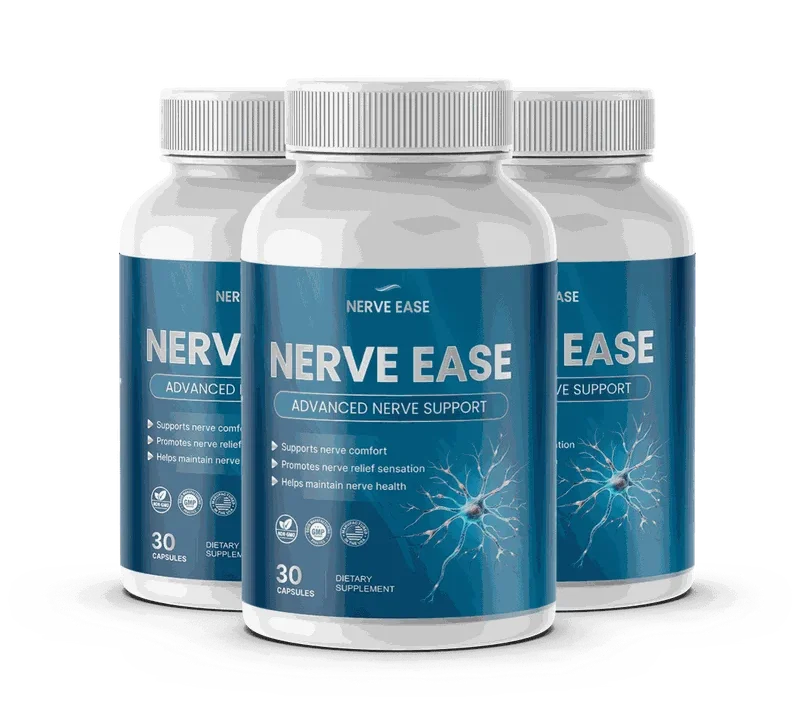
Nerve Ease
What's actually in the bottle
Nerve Ease packs eleven ingredients into a single 600mg proprietary blend: Himalayan pink salt, cinnamon extract, AGP choline, bacopa monnieri (standardized to 20%), lutein (5%), bilberry leaf powder, vitamin B6, ginkgo biloba powder, vitamin B12 (1%), zeaxanthin (5%), and green tea extract (50%). The label states the combined blend weight but stops there — it does not break out how many milligrams of any single ingredient the formula actually contains.
That gap is the core issue with a proprietary blend format generally, and it applies in full here. Eleven ingredients sharing 600mg works out to an average of roughly 55mg apiece if evenly split, but blends are rarely split evenly — a formula can list an ingredient near the top for marketing weight while including only a token amount of it, and a shopper has no way to tell which ingredients are doing the heavy lifting and which are present in trace amounts only. Without milligram-level disclosure, there's no way to compare what's actually in a Nerve Ease capsule against the doses used in any study of these ingredients, because there's no dose figure on this label to compare.
A label detail worth flagging on its own
Separate from the blend-disclosure issue, we found a serving-size inconsistency: the physical product label lists two capsules as a full serving, while some third-party retail listings for the same product describe a one-capsule serving. That's not a small discrepancy — it directly affects how much of the (already undisclosed) blend a buyer is taking per dose, and it means the serving size itself should be confirmed against the label on the bottle actually received rather than assumed from any single retail page.
Who makes it
The product page names its distributor only as "MJO," based in Sheridan, Wyoming, with manufacturing described as occurring in the United States. We found no FDA facility-registration claim and no GMP-certification claim published anywhere on the page. Neither of those absences proves anything is wrong with where or how the product is made — plenty of legitimate supplement lines simply don't advertise those credentials — but their absence, paired with a distributor name that isn't a full registered company name, leaves less to verify than a fuller corporate disclosure would.
We also noted that per-bottle pricing for Nerve Ease varies by purchase quantity and by which retail domain is selling it — a tiered structure (higher per-bottle cost for a single bottle, lower per-bottle cost the more you commit to upfront) that is a common direct-to-consumer funnel pattern across this product category, not unique to this item, but worth knowing going in.
We found no clinical trials testing the Nerve Ease formula as a whole. Individually, a 2014 meta-analysis found bacopa monnieri showed potential to improve cognition, particularly speed of attention, though the authors noted larger head-to-head trials are still needed. A 2026 Cochrane review covering 82 trials of ginkgo biloba found no convincing evidence that it improves cognitive performance in healthy adults under 60. The B vitamins have documented, well-established roles in nervous-system function generally, but research specifically testing supplemental B6/B12 for a cognitive or nerve-comfort benefit in people who aren't deficient remains limited. None of this is evidence for or against Nerve Ease as a finished, undosed blend — it's what exists for the ingredient names on the label, at whatever amount each is actually present.
Why this earns a Grade C
We grade on how strong the real, published evidence is for the product as sold — not on how individual ingredients are marketed elsewhere. Nerve Ease loses points on the same two fronts we consistently flag in proprietary-blend products: the undisclosed per-ingredient dosing means a buyer can't verify what they're actually taking, and the serving-size inconsistency across sources compounds that uncertainty rather than resolving it. Layered on an evidence picture that's genuinely mixed even for the named ingredients at a known dose — strong for none of them, promising-but-unconfirmed for one, and unsupported for another in the relevant population — that combination keeps this out of a higher grade regardless of what any single ingredient might do on its own.
Anyone pregnant, nursing, on prescription medication — including blood thinners, given ginkgo's known interaction profile — or managing an existing nerve or health condition should talk to a healthcare provider before starting any new supplement, and that caution applies even more when the label won't disclose the dose of what's being taken.
Rather than recommend Nerve Ease itself, we'd point toward two of its named ingredients sold at a transparent, individually printed dose: Nature Made Magnesium Citrate and NOW Foods Ginkgo Biloba (60mg, 24% standardized extract). Neither will replicate an eleven-ingredient blend's marketing claims, but with either one you'll actually know the milligram amount you're taking.
Check Nature Made Magnesium Citrate on Amazon →Check NOW Foods Ginkgo Biloba on Amazon →
These statements have not been evaluated by the FDA. This product is not intended to diagnose, treat, cure, or prevent any disease. Talk to a healthcare provider before starting any new supplement.