SodaMelt Review: Six Storefronts, One Undisclosed Blend
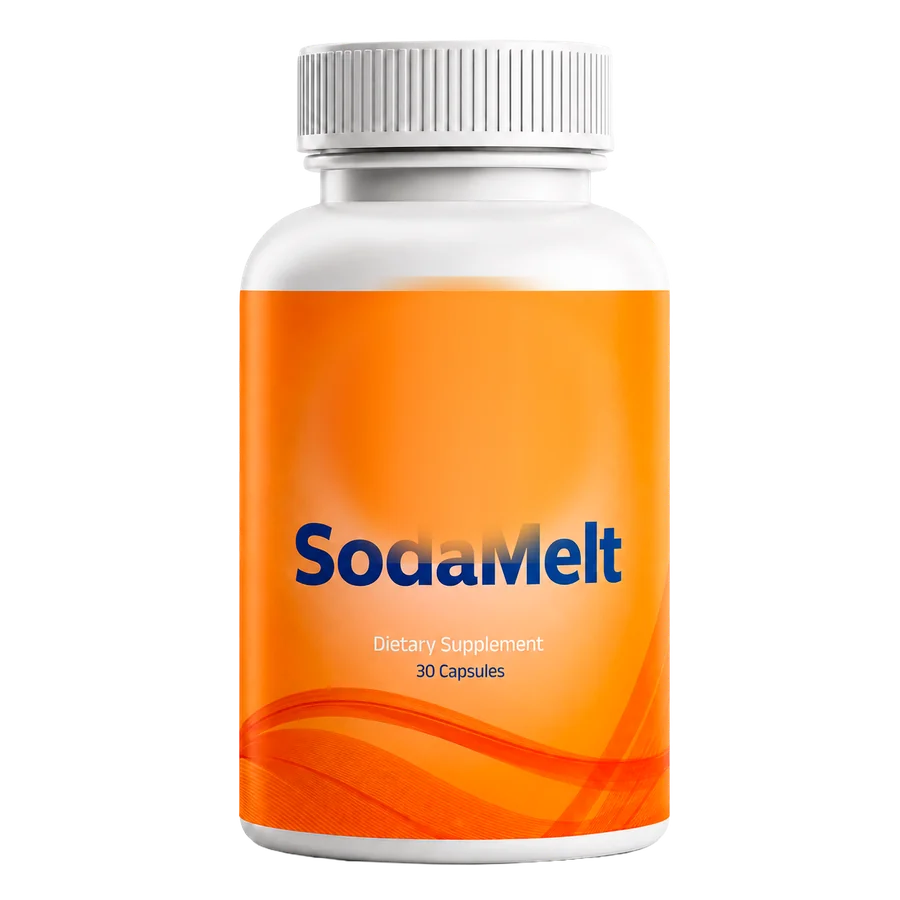
Type "SodaMelt" into a search bar and you don't get one storefront back — you get at least six, each running under its own domain and its own pitch: a "metabolic wellness formula" here, a "digestive wellness formula" there, a "weight management" angle on a third. Pull up the Supplement Facts panel on any of them, though, and the label is identical, down to the milligram. That's a different problem than the one we're used to flagging in this category. It isn't that the formula changes depending on where you buy it. It's that the formula itself doesn't tell you much, no matter which of the six doors you walk through.
Same label, four different pitches, six different addresses
We located and opened six currently live SodaMelt sales sites: sodamelt.com ("Metabolic Wellness Formula"), getsodamelt.com ("Digestive Wellness Formula"), sodamelt.us ("Metabolism & Weight Management"), sodaemelt.com ("Weight Loss & Metabolism Formula"), gosodamelt.com and mysodamelt.com (both "Digestion Capsules"). Every one of the six displays the same Supplement Facts panel and the same three pricing tiers. Four of them (sodamelt.com, getsodamelt.com, gosodamelt.com, mysodamelt.com) also print the same Ogden, Utah PO box; the remaining two, sodamelt.us and sodaemelt.com, publish no mailing address on any page we opened, and their order buttons simply forward to a checkout funnel hosted on sodamelt.com. What differs is the marketing frame layered on top — a shopper searching for a digestion aid and a shopper searching for a weight-management aid can each land on a page that speaks directly to them, without knowing it's the identical bottle underneath.
sodamelt.com
- "Metabolic Wellness Formula"
- $89 / 1 bottle
getsodamelt.com
- "Digestive Wellness Formula"
- $89 / 1 bottle
sodamelt.us
- "Metabolism & Weight Management"
- $89 / 1 bottle
sodaemelt.com
- "Weight Loss & Metabolism Formula"
- $89 / 1 bottle
gosodamelt.com
- "Digestion Capsules"
- $89 / 1 bottle
mysodamelt.com
- "Digestion Capsules"
- $89 / 1 bottle
All six sites, checked the same day, priced a single bottle at $89, three bottles at $59 each ($177), and six bottles at $49 each ($294), each shown against a higher struck-through "was" price. Whichever positioning brought you in the door, the bottle, the label, and the bill are the same.
What the label actually discloses
Only one ingredient on the printed Supplement Facts panel gets its own number: calcium (as calcium carbonate), listed at 100mg per one-capsule serving (7.5% of the Daily Value). Everything else is grouped under a single "Proprietary Blend" line with one figure attached, 250mg, and no per-ingredient amounts. Sorted by type, the eleven blend components are: three fiber and grass sources (psyllium husk, oat straw, alfalfa), four botanicals traditionally used as stimulant laxatives (cascara sagrada bark, buckthorn bark, Chinese rhubarb root, aloe vera leaf), two bitter or astringent roots (gentian, goldenseal), one clay (bentonite), and one probiotic strain (Lactobacillus acidophilus). Rolling a formula up into a proprietary-blend line is permitted under U.S. labeling rules and widespread in this category. The practical consequence is that a buyer on any of the six storefronts has no way to learn from the label which of those eleven components account for most of the 250mg and which are present only in trace quantities.
Published research on psyllium husk and oat fiber for regularity typically uses single doses in the multi-gram range — several thousand milligrams a day, taken on their own. SodaMelt's entire blend, splitting eleven ingredients between them, totals 250mg. There isn't room inside that total for most of the eleven to approach the doses used in the research this category of product usually points to, and the label gives no way to tell how the 250mg is actually divided.
Four of the eleven are stimulant-laxative botanicals
Cascara sagrada bark, buckthorn bark, and Chinese rhubarb root are traditional stimulant-laxative botanicals, and aloe vera leaf has a related traditional use. The U.S. FDA's May 9, 2002 final rule on over-the-counter laxative drug ingredients (67 FR 31125) concluded that both cascara sagrada (including the bark) and aloe (including aloe extract) are not generally recognized as safe and effective for OTC stimulant-laxative drug use, effective November 5, 2002 — a finding specific to their status as regulated OTC drug ingredients, not a ban on selling them as dietary-supplement ingredients, which remains legal under a separate, lower evidence standard. Practically, a blend built partly around stimulant-laxative botanicals can produce a real "lighter" feeling by moving digestion along faster, which is a different mechanism than the metabolic framing used on some of the six sites selling it. We did not find explicit disease or cure claims in the body copy of any of the six sites we opened.
The checkout and the company behind it
Every "Buy Now" button we traced across the six sites ends up — directly, or after a hop through sodamelt.com's order funnel — at the same processor, BuyGoods, with an affiliate ID embedded in the checkout link. BuyGoods Inc.'s own Better Business Bureau profile, filed in Boise, Idaho, currently shows a C+ rating, no BBB accreditation, and 440 closed complaints over the last three years. That's a materially different processor, and a less severe complaint record, than the one behind a comparable product we've reviewed separately in this category — but it's still a third party standing between a shopper and their money, worth knowing about before checkout rather than after.
On the label itself, the "Distributed by" block reads simply "SodaMelt" above a PO box in Ogden, UT 84412, followed by a support email at healthyconsumer.us — a domain that matches none of the six storefronts and that returned no website at all when we tried it on 2026-09-29. Nowhere along that chain — the storefronts, the label, or the brand's own GlobeNewswire launch release dated September 18, 2026 — did we find a phone number or a legal entity name. The release, datelined Ogden, refers to the company only as "SodaMelt," points readers to yet another domain (soda-melt.store), and pairs its "metabolic wellness" framing with an explicit statement that the phrase is not a claim that the product diagnoses, treats, cures, or prevents any disease or medical condition.
Not recommended as sold. To SodaMelt's credit, we didn't find the kind of ingredient-panel inconsistency across storefronts that we've flagged on other products in this category — all six sites we checked sell the identical formula at identical prices. But the formula itself discloses almost nothing: eleven ingredients, four of them stimulant-laxative botanicals, are folded into a single undosed 250mg blend, sold through six differently-branded fronts with no named legal company and no phone number behind any of them, and checkout runs through a processor with hundreds of closed BBB complaints. A shopper can verify the bottle they're ordering is consistent. They can't verify what's actually in it, or exactly who they're paying.
Anyone pregnant, nursing, under 18, taking prescription medication, or managing a diagnosed digestive condition should talk with a healthcare provider before starting any supplement built around stimulant-laxative botanicals like cascara sagrada, buckthorn bark, or Chinese rhubarb root, which can cause cramping or interact with certain medications.
If the ingredient a shopper actually wants out of this blend is psyllium husk — the component with the deepest research record for regularity among the eleven — it's available as a single-ingredient product with the dose printed on the label. NOW Foods Psyllium Husk Caps list 500mg of psyllium husk per capsule, so a buyer knows exactly how much fiber each capsule contains, versus an unknown share of SodaMelt's 250mg blend. This is an independent alternative from an established supplement manufacturer, not a SodaMelt product, and it isn't offered here as a way to address any medical condition.
Check current listing on Amazon →These statements have not been evaluated by the FDA. This product is not intended to diagnose, treat, cure, or prevent any disease. Talk to a healthcare provider before starting any new supplement.
This entry is unpaid and independent, based on our own review of each site's current label, pricing, and checkout flow rather than any manufacturer-supplied material. When we do point to a specific product, we link to authorized retailers and may earn a commission at no extra cost to you.