Vapofil Review: Three Ingredient Panels, One Product Name
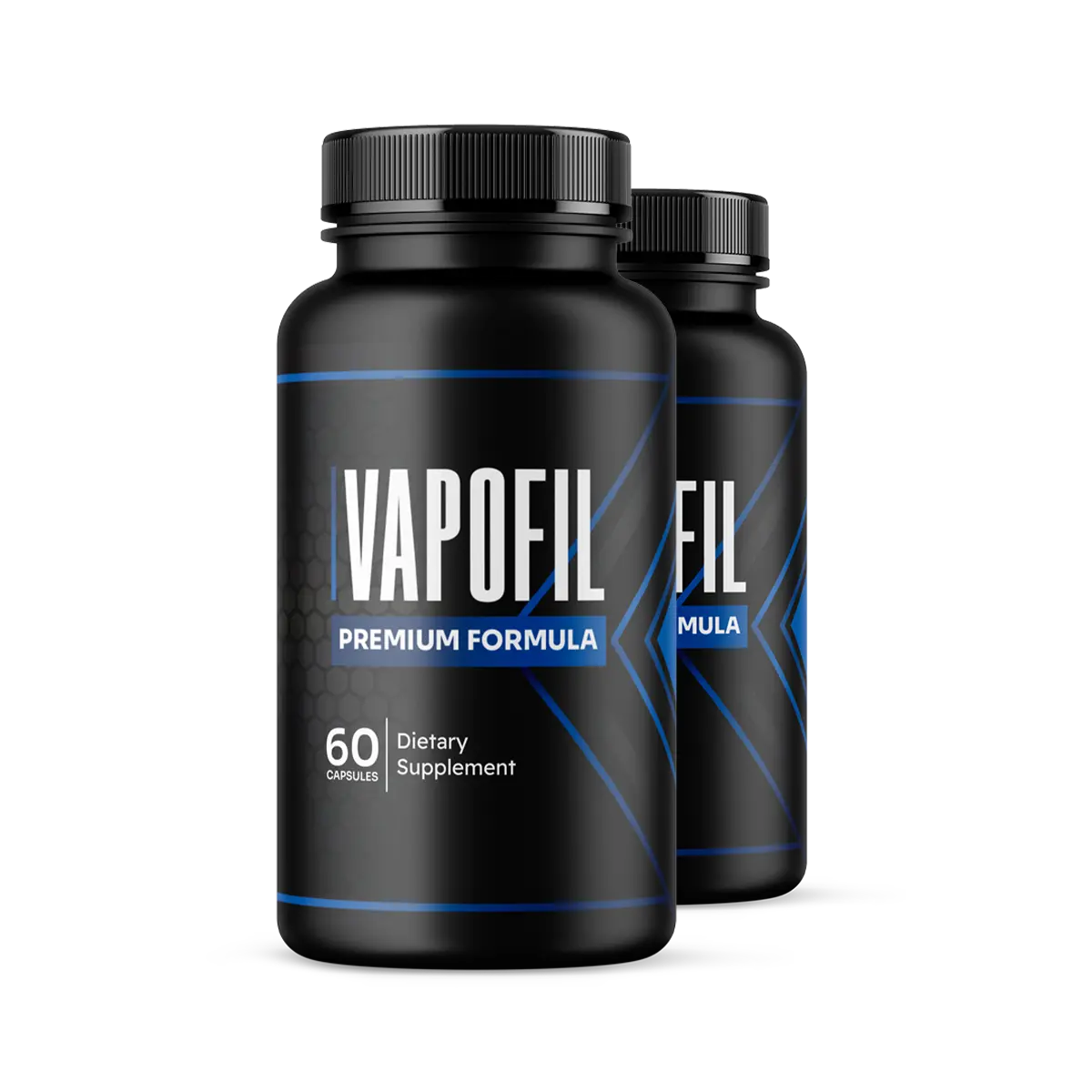
Search "Vapofil official site" and you won't land on one page — you'll land on at least three, each insisting it's the real one: vaposfil.com, vapofill.net, and official-vapofil.com. That split is where this review starts, not where it ends up. When a single product can't settle on one web address, the more useful question is whether it can settle on one formula. Ours couldn't.
Same brand name, three different ingredient panels
We treat a photographed Supplement Facts panel as the only primary-source document worth building a review around, and the one we examined lists seven active ingredients: Saw Palmetto Berry Extract, Wild Yam Root Extract, Sarsaparilla Root Extract, and Nettle Leaf Extract at 20mg each, Boron Amino Acid Chelate at 20mg, Tongkat Ali at 10mg (from a 100:1 extract), and Epimedium extract at 8mg (from a 10:1 extract). That's one panel. Searching further for what else ships under the Vapofil name turns up two more, structurally different formulas: a listing built around Yohimbe extract, ashwagandha, and maca root, and a separate ten-ingredient version — sold under a manufacturer name of "Syvor" — built around L-arginine, L-citrulline, zinc, ashwagandha, panax ginseng, maca root, magnesium, and vitamin D3. Line the three up and the only ingredient every one of them shares is tongkat ali.
Label we photographed
- Saw palmetto 20mg
- Wild yam 20mg
- Sarsaparilla 20mg
- Nettle leaf 20mg
- Boron 20mg
- Tongkat ali 10mg
- Epimedium 8mg
Third-party listing
- Yohimbe extract
- Ashwagandha
- Maca root
"Syvor" 10-ingredient version
- L-arginine
- L-citrulline
- Tongkat ali
- Zinc
- Ashwagandha
- Panax ginseng
- Maca root
- Magnesium
- Vitamin D3
None of this proves any single panel is fake — botanical supplement makers do sometimes reformulate. What it means practically is that nobody ordering "Vapofil" today can know in advance, from the brand name alone, which of these three panels will arrive in the bottle. The rest of this review is built entirely on the one panel we could verify against a real, photographed label.
What the doses on that one label actually mean
Two ingredients on the verified label are worth doing the math on. Tongkat Ali is listed at 10mg from a 100:1 extract — the label's own math puts that at roughly 1,000mg of dry tongkat ali root equivalent, which sits inside the range used in published tongkat ali research and in most single-ingredient tongkat ali products sold on their own. Epimedium, by contrast, is listed at 8mg from a 10:1 extract, equivalent to roughly 80mg of dry Epimedium. Standalone Epimedium products are typically sold at doses closer to 500mg per serving — meaning the amount on this label is a small fraction of what a shopper would get from a dedicated Epimedium product, even though it's listed as a named active ingredient here.
Tongkat ali, Epimedium, saw palmetto, wild yam, sarsaparilla, nettle leaf, and boron are all real, commonly studied ingredients on their own. None of the published research on any of them was conducted on this specific seven-ingredient blend at these specific doses, and a dosing check like this one can't tell you which of the three competing formulas above you'd actually receive.
What happens after you decide to buy
Pricing shifts depending on which storefront you land on and which quantity you select — one bottle runs roughly $89, with per-bottle pricing dropping into the $49–$79 range on multi-bottle tiers, though the exact break points aren't consistent across the domains selling it. More consequential than the price itself is who processes the payment: checkout runs through Cartpanda, a third-party processor used across a wide range of unrelated supplement sellers. The Better Business Bureau opened a formal inquiry into Cartpanda and closed it in June 2026 concluding the company was operating in "bad faith," citing a documented pattern of not honoring its own advertised 30-, 60-, and 180-day money-back guarantees, issuing partial refunds where full ones were promised, and charging some customers multiple times for a single order — including for upsells customers say they declined at checkout.
Who's actually behind the label
The verified label reads "Distributed for GEX Corp, Lakeland FL 33804." The closest matching Better Business Bureau record is GEX Corporation LTD, on file at an address in Largo, Florida — roughly 85 miles from the Lakeland address printed on the bottle. As of this review, that BBB profile carries an F rating with 1,098 complaints logged in a three-year window (a figure that has moved since it was last checked for this portfolio — it stood at 1,111 as recently as a few days earlier, which tells you the complaint count is actively climbing or being processed, not a fixed historical number). The complaints on file aren't limited to Vapofil: the same BBB record references customer complaints tied to a sugar-support drop product and a second drop product called "Gelatide," meaning whatever business sits behind that Largo address is fielding complaints across more than one supplement line, not just this one.
The marketing running alongside the product
Separate from the label and the checkout, independent reporting has documented a wave of AI-generated video ads for Vapofil that reuse real footage of public figures, overlay an AI-cloned voice, and lip-sync the result to imply an endorsement. Nine names have been identified across this coverage: Leonardo DiCaprio, Sydney Sweeney, Anya Taylor-Joy, Mia Khalifa, Bill Gates, Jason Statham, Tom Cruise, Sylvester Stallone, and Joe Rogan. Independent fact-checkers report finding no evidence that any of the nine has an actual relationship with this product, and this exact ad format — recycled celebrity footage, cloned voice, invented "secret method" framing — has been separately documented running for a number of unrelated vitality-supplement brands, not just this one. That doesn't make the practice less relevant here; it means the specific ads promoting Vapofil are one instance of a pattern that shows up industry-wide.
Not recommended as sold. The individual ingredients on the one label we could verify are real and reasonably studied on their own, and the tongkat ali dose in particular is in a legitimate range. But a shopper today can't be sure which of three competing formulas ships in the box, the checkout processor carries a formal BBB bad-faith finding closed just months ago, the printed distributor address doesn't match the closest BBB record for that business name, and the product's own marketing leans on AI-fabricated celebrity footage that nine separate public figures had no part in. Each issue alone might be arguable; together they add up to more risk than the ingredient list justifies.
Anyone pregnant, nursing, under 18, taking prescription medication — including blood pressure or hormone-related medication — or managing a health condition should talk with a healthcare provider before starting any new supplement, including one built around botanicals like saw palmetto and tongkat ali that can interact with hormone-sensitive conditions and certain medications.
Rather than gamble on which of Vapofil's three formulas would arrive, we'd point toward a single, standardized ingredient with its dose printed plainly on the label: LJ100 Tongkat Ali, a patented extract with more than two decades of published research behind it and a fixed, disclosed standardization (40% glycosaponins) rather than a proprietary blend. It won't replicate any of Vapofil's multi-ingredient panels, but you'll know exactly what you're taking and at what dose.
Check current listing on Amazon →These statements have not been evaluated by the FDA. This product is not intended to diagnose, treat, cure, or prevent any disease. Talk to a healthcare provider before starting any new supplement.
This entry is unpaid and independent. It is a companion review to our separate RPT-21 dossier on this product, written and researched independently rather than adapted from it; where the two differ in detail (for example, this review's current BBB complaint count), the more recently checked figure is noted as such. When we do point to a specific product, we link to authorized retailers and may earn a commission at no extra cost to you.